Keeping Curiosity Alive
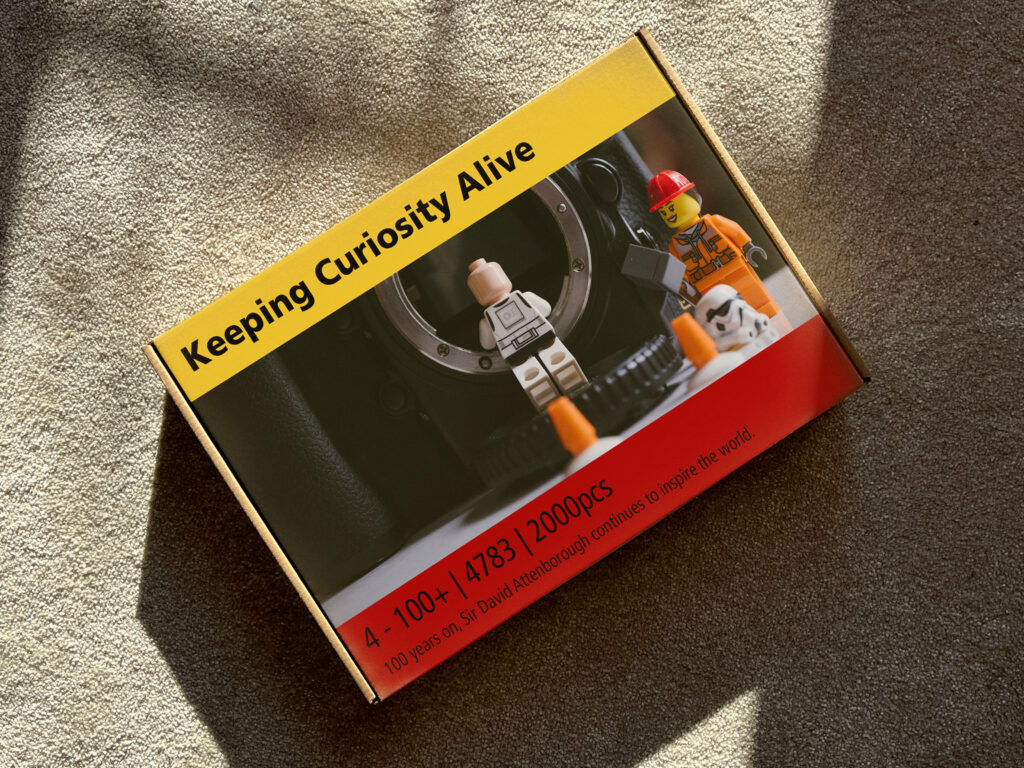
On the 8th of May 2026, Sir David Attenborough turned 100. To honour him, Lego sent a birthday wish to him on social media with a photo of a lego box with a new age range. No longer for ages “4-99” but now “4-100+” with the phrase “Updated for you, Sir David. There is no age limit for those who never stop playing.” It was a fitting tribute to a man who has kept us glued to the screens of nature programmes for decades with his passion for wildlife and never-ending curiosity in planet earth.
In our work equipping and supporting clients to Navigate Retirement well, we always aim to help them reimagine retirement and reinvent themselves. The big idea is to keep using your intrinsic skills, keep your curiosity alive and find ways to keep making meaningful contributions to society. If you can get this right, you will keep yourself mentally sharp, lower the risks of dementia and rediscover purpose and identity.
In their book, “The 100 Year Life,” authors Lynda Gratton and Andrew Scott unpack the implications of increasing life expectancy trends across the world. They say that if the trends continue, more than 50% of children born in the modern world today will live to 100. This means that the traditional view of life in the three phases of education, work and retirement should be rethought entirely. If you were to retire at age 65 and live to 100 like Sir David Attenborough, you would be more spending more than one third of your lifetime in retirement – God forbid that you should spend this time sitting on a beach or on a couch somewhere.
Japan has one of the highest employment rates of over 65-year-olds in the world. 1 out of 4 workers over 65 remain employed. Government encourages this practice through subsidy schemes. Older employees are retained and employed to do very little or sometimes nothing at all. They call them the “madogiwa-zoku” – literally translated as the “window side tribe” since they are shifted to the far sides of the offices, near the windows where they are not expected to do much and have no formal or clear job description. They would often read newspapers and just stare out of the window to pass the time. It is seen in Japanese culture as a reward for loyalty.
It is a strategy that looks strange and is perceived as wasteful in Western corporate cultures which chase quarterly targets and minimise headcounts. Admittedly Japan has low unemployment, low birth rates and an ageing population – a very different context to South Africa – yet the loyalty shown to older workers who have given their lives to build successful companies does appear to pay dividends indirectly. Training costs stay low. Intellectual property is retained. The window seat isn’t retirement. The madogiwa-zoku are free to move around, remain curious, look into problems that need to be solved, mentor younger employees or simply by being present create a culture of psychological safety. Others see how the company treats its veterans. It sends a message that if I give my best years to the company, they will respect me and reward my loyalty.
A lot of planning and effort goes into onboarding. What about offboarding? If we are not able to create our own “window side tribes” to retain older workers, the least we can do is to prepare them for what retirement looks like. By offboarding, we are not just talking about a lunch, a speech and a farewell gift. No, it needs to include the psychological and social support needed to turn the big retirement transition into a meaningful opportunity to reinvent oneself and keep curiosity alive.
At Xpand we have the experience and expertise to assist and support organisations, HR practitioners and their staff prepare well for the big retirement transition. Our Navigating Retirement Process comes complete with a Scan and Workbook to help you to create a meaningful offboarding experience for your most long-serving staff members. We have found that when offboarding is done well those employees move from fear and helplessness to purpose and hopefulness about their futures. This gives them freedom to be more generous and intentional about mentoring successors, maximising the baton handovers and imparting valuable institutional knowledge. One also develops a reputation as an organisation that truly values people by being willing to invest in employee well-being at all ages and stages of life.
If you are interested, please be sure to reach out to one of our consultants today.
Blog written by Gareth Stead.