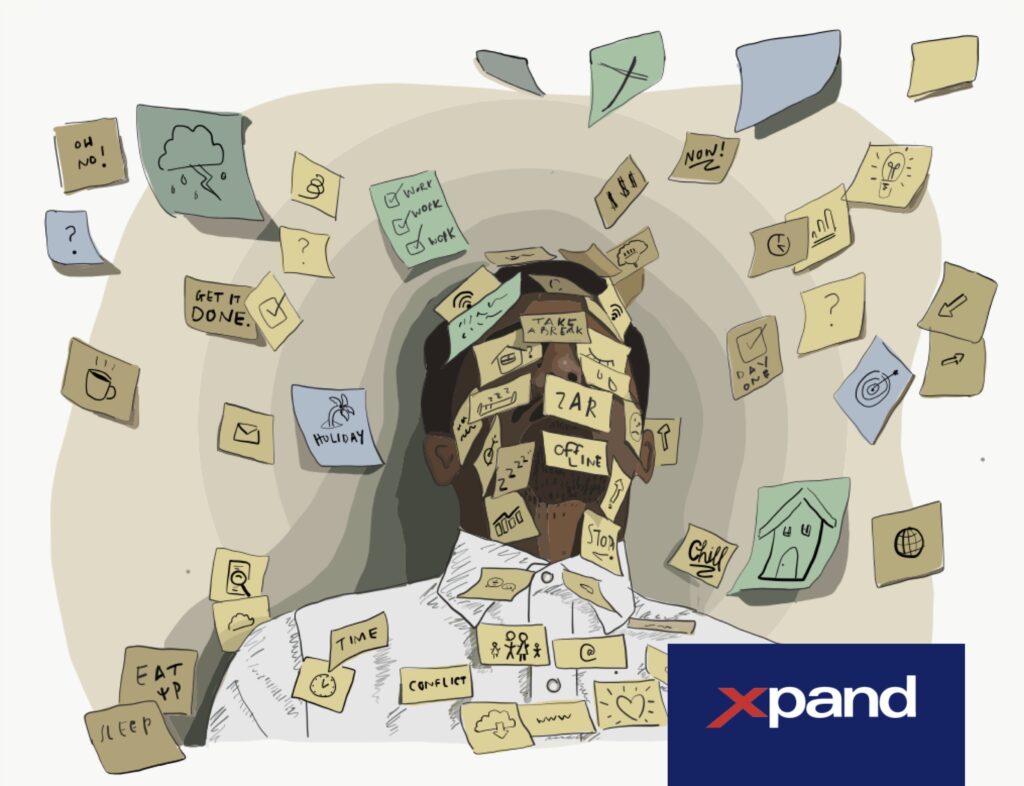
Stress triggers and how to deal with it.
I want to begin with the quote I ended in the last blog by Joseph Goldstein: “You can’t hold back the waves, but you can learn to surf”.
Through this blog series, we aim to serve you to understand stress and how to deal with healthy and unhealthy stress in a productive manner.
We are looking at the following topics:
- Basic understanding of stress.
- Becoming aware of stress triggers and the effect stress has on our body.
- Understanding my internal stress factors and my personal response.
- Developing short and long-term stress management strategies.
In this specific blog we will look at the triggers that creates healthy and unhealthy stress and its effects on our body.
Triggers are external events and circumstances that creates healthy or unhealthy stress within us.
Here are some of the basic stress triggers:
1.Critical life events
- Factors that are mainly perceived as negative(e.g. death of a relative, being unemployed)
- Factors or events that are mainly perceived as critical: (e.g. environmental catastrophes, war, economic crisis)
- Factors that are mainly regarded as positive (e.g. marriage, birth of a child, winning the lottery)
2.Development tasks
- Biological development tasks (e.g. puberty, aging of the body)
- Personal development tasks (e.g. developing an identity, career)
- Social development tasks (e.g. choosing a partner, choosing a profession, retirement)
3.Daily hassles
- Examples: being criticized by a manager, forgetting something or being late, noisy neighbors, bad lighting at work, noise in the house while being in online meetings.
As with the waves of the ocean, that keeps breaking on the shores of our life, these triggers are often unavoidable. What is important is that we become aware of the specific triggers in our current context of life. Once we have identified the trigger we can start planning on how to deal with it. Lets start identifying the triggers.
Here are a few reflective questions:
a. What specific triggers are creating stress in your life?
b. Is it creating healthy or unhealthy stress and why?
c. What specifically about this trigger creates the stress?

Stress is something that has an impact on our physical body. Therefore it is important to look out for and try to understand the signals our body give us when stress is triggered in our life.
Here are a few types of signals that our body give us when stress is present:
- Physical signals
Palpitation of the heart, sleeping problems, indigestion, dorsal pain.
- Emotional signals
Nervousness, huffiness, anxiety, dissatisfaction, inner emptiness and apathy.
- Cognitive signals
Difficulties with concentration, emptiness in thinking ability, nightmares.
- Behavior-related signals
Finger tumbling, irregular eating, consumption of alcohol or medicine to slow down.
Which of these signals are the first you become aware of when under stress? Understanding the signals helps us to handle the stress more actively instead of allowing the stress to overwhelm us. If we don’t become aware of these signals it can lead to our body being increasingly affected by the stress.
Stress can affect the following parts of our body:
- our brain and mind
- our cardiovascular system
- our gastro-intestinal system,
- our muscles
- our skin
- our reproductive organs
- our lungs and respiratory system
From the above we can see that it is important to understand the triggers, the signals our body gives us and the affect it has on our body.
What can I do to become more aware of the triggers and signals and deal with it in a healthy way:
- Learn to listen to your body.
- Be aware of the context of your life and the specific challenges you face.
- Reflect to understand the specific reason behind the trigger. Why is this exactly creating stress for me?
- Create an action plan to deal with the stress in a healthy manner.
We want to wish you all the best as you learn to deal with the stressors of life in a productive manner.
Complete your personal stress assessment and get support in handling your stress effectively!
Contact us at info-sa@xpand.eu or 079 434 9030.
Attention all trainers, HR and coaches! You are welcome to attend our Persolog Stress Profile License Training 29-30 October 2020.
Contact us at info-sa@xpand.eu or 079 434 9030 for more information.
Sincere greetings,
Xpand South Africa
Empowering individuals and organizations to thrive.